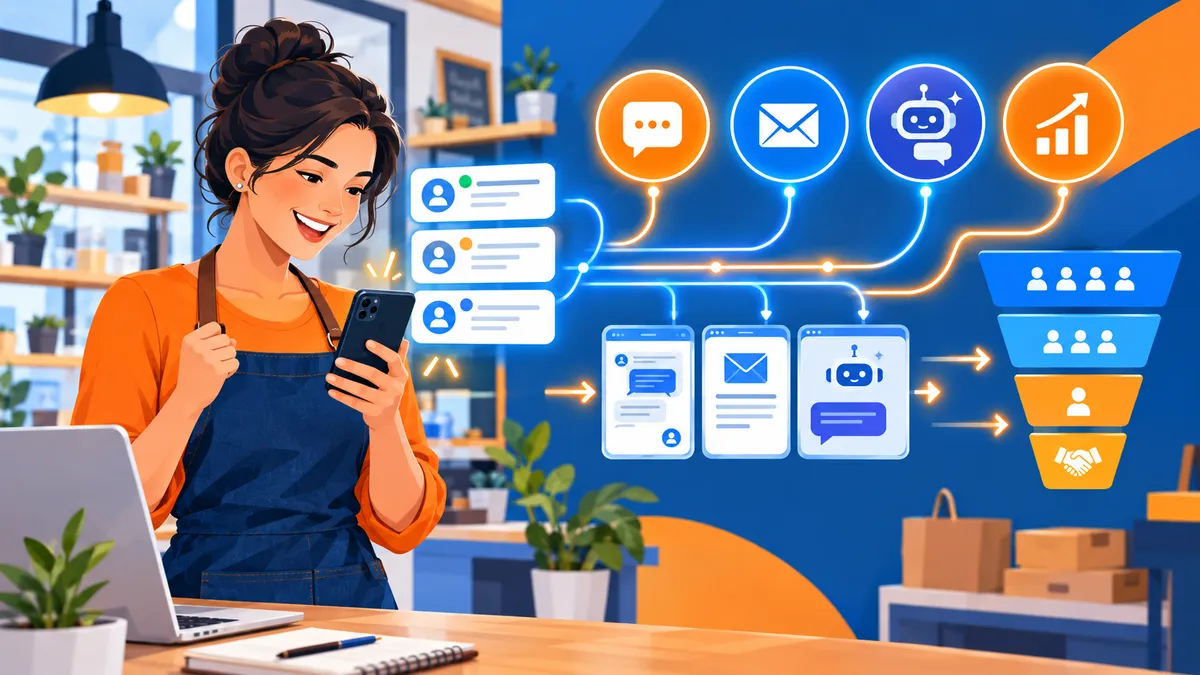
Speed-to-Lead: Why Automated Follow-Up Is the #1 Growth Strategy for Small Businesses in 2026
Speed-to-Lead: Why Automated Follow-Up Is the #1 Growth Strategy for Small Businesses in 2026
You worked hard to get that lead. You ran the ad, crafted the offer, built the landing page. A prospect clicked, filled out the form — and then waited. Maybe you called back in a few hours. Maybe the next morning. By then? They'd already booked with a competitor who responded in under five minutes.
This is the speed-to-lead problem, and it is quietly killing small business revenue across every industry. In 2026, the businesses winning the most customers aren't necessarily the best at their craft — they're the fastest and most consistent at following up. The good news: with the right automation system, you can be both.
What Is Speed-to-Lead — and Why Does It Matter So Much?
Speed-to-lead refers to the time between when a prospect expresses interest (fills out a form, clicks a chat widget, calls and hangs up) and when your business makes first contact. Research has consistently shown that the businesses that respond within the first few minutes are dramatically more likely to convert that lead into a paying customer.
Think about your own behavior as a consumer. When you're ready to buy or book, you're in a specific mindset — motivated, curious, and actively comparing options. If one company responds instantly and another responds hours later, the late responder feels like an afterthought, even if they're technically the better choice.
For small businesses without a dedicated sales team monitoring inboxes around the clock, the gap between a lead coming in and someone actually following up can stretch to hours — or worse, days. That gap is where revenue goes to die.
The 2026 Reality: Your Competitors Are Already Automating
Marketing automation is no longer a tool reserved for enterprise companies with six-figure budgets. In 2026, AI-powered follow-up systems are accessible and affordable for businesses of every size — which means if you're not using them, someone else in your market already is.
Automated lead follow-up tools can now:
- Detect a new lead the moment they opt in and fire a personalized text within seconds
- Send a coordinated sequence of SMS and email messages over days and weeks
- Use AI to qualify leads, answer common questions, and even book appointments — without any human involvement
- Pause automation the instant a prospect replies and alert your team to take over the conversation
- Track every touchpoint so nothing slips through the cracks
This isn't futuristic. It's happening right now, and small businesses that build these systems are seeing measurable lifts in lead conversion, booked appointments, and revenue — without adding headcount.
The Anatomy of a High-Converting Automated Follow-Up System
Not all automation is created equal. A truly effective lead follow-up system has several key components working together:
1. Instant Speed-to-Lead Response
The moment a prospect opts in — whether through a web form, a Facebook Lead Ad, a Google ad click, or a chat widget — they should receive a personalized text message within 60 seconds or less. This instant touchpoint does two things: it confirms to the lead that they're in good hands, and it opens a real two-way SMS conversation before they've even had a chance to consider a competitor.
2. Multi-Touch SMS + Email Drip Sequences
A single follow-up message is rarely enough to close a sale. Effective nurture sequences combine the near-universal open rates of text messaging with the depth and educational power of email. A well-built drip campaign keeps your business top-of-mind over days and weeks, delivering value, social proof, and calls to action at the right intervals.
3. Smart Reply Routing
One of the biggest mistakes businesses make with automation is letting it run even after a prospect has replied and is ready to talk. A smart follow-up system pauses automated messages the moment a real response comes in and immediately notifies your team so a human can step in, have a genuine conversation, and close the deal.
4. AI-Powered Lead Qualification
Advanced systems go even further, using AI chat and voice capabilities to handle inbound inquiries, ask qualifying questions, and book appointments — all without requiring anyone on your team to be available 24/7. This means you capture and qualify leads at 2 a.m. on a Saturday just as effectively as you do during business hours.
5. A Unified Inbox
Leads come in from multiple channels — your website, social media, Google Business Profile, phone calls, and more. A centralized inbox that consolidates every conversation thread ensures no lead gets lost across platforms, and your team always has full context on every prospect they speak with.
Why SMS Is Still the Most Powerful Follow-Up Channel in 2026
Email open rates continue to decline as inboxes grow more crowded. Phone calls are increasingly screened or ignored from unknown numbers. But text messages remain remarkably effective — open rates for SMS marketing consistently hover well above 90%, and most texts are read within minutes of delivery.
For local and service-based businesses especially, SMS is the fastest path to a real conversation. When your automated system sends a prospect a friendly, personalized text the moment they raise their hand, it feels immediate and human — not like a mass marketing blast. That perception matters enormously in industries where trust drives buying decisions.
Pair SMS with strategic email follow-ups for the leads who don't respond to texts, and you create a multi-channel safety net that captures a far higher percentage of interested prospects than either channel alone.
Real-World Impact: What Businesses Are Seeing
Businesses that implement structured, automated follow-up systems typically report improvements across several key metrics:
- Higher contact rates: Reaching leads within the first few minutes dramatically increases the odds of making contact at all.
- More booked appointments: Automated booking flows remove friction and let interested prospects schedule immediately while motivation is high.
- Shorter sales cycles: Consistent nurturing keeps prospects warm, so when they're ready to decide, your business is the obvious choice.
- Less wasted ad spend: When your follow-up system converts more of the leads you're already paying to generate, your cost per acquisition drops significantly.
The common thread in every success story: these businesses stopped treating follow-up as a manual, sporadic task and started treating it as an automated, systematic process.
Common Follow-Up Mistakes Small Businesses Make
Even businesses that understand the importance of follow-up often fall into predictable traps:
- Waiting too long: Any delay beyond a few minutes dramatically reduces contact and conversion rates. Every hour that passes, the lead cools.
- Following up only once: Most leads don't convert on first contact. Businesses that give up after one message or call leave significant revenue on the table.
- Using only one channel: Relying exclusively on email or exclusively on phone calls misses large segments of your audience who prefer other forms of communication.
- No system for replied leads: Continuing to send automated messages after a prospect has replied and expressed interest is a fast way to lose the sale.
- Inconsistent follow-up: Manual follow-up processes depend on whoever is available and motivated that day. Automation removes the human variability and ensures every lead gets the same high-quality experience.
How to Build Your Automated Follow-Up System: A Starting Framework
If you're ready to stop losing leads to slow response times, here's a practical framework to get started:
- Map your lead sources. Identify everywhere leads currently come in — forms, ads, chat, calls, social media — so you can connect each source to your automation system.
- Write your first five follow-up messages. Create one instant response text, two to three follow-up SMS messages spaced over the first week, and at least two supporting emails. Keep each message short, friendly, and action-oriented.
- Set up reply detection. Ensure your system recognizes when a prospect replies and pauses automated messages immediately while alerting your team.
- Add a booking link. Make it effortless for interested prospects to schedule a call or appointment directly from a text or email.
- Review and optimize monthly. Look at which messages get the most replies and bookings, and refine the sequence over time based on real data.
The goal is a system that runs without you — one that works while you're on a job site, in a meeting, or asleep — and hands warm, qualified conversations to your team at exactly the right moment.
Frequently Asked Questions
How fast should I follow up with a new lead?
As fast as possible — ideally within 60 seconds. Research consistently shows that the first minute after a lead opts in is the highest-intent window. Automated systems make this achievable regardless of what your team is doing at that moment.
Will automated messages feel impersonal to my customers?
Not when they're written well. Personalized automation that uses the prospect's name, references their specific inquiry, and opens with a conversational tone feels helpful and attentive — not robotic. The key is writing messages that sound like a person sent them, not a machine.
How many follow-up messages should I send?
At minimum, plan for five to seven touchpoints across the first two weeks — a mix of SMS and email. Many prospects won't respond until the third, fourth, or fifth message. Persistence, done respectfully, pays off.
Do I need a big budget to set this up?
No. Modern CRM and marketing automation platforms have made these tools accessible for small businesses at a fraction of what enterprise systems cost even a few years ago. The ROI from converting even a handful of additional leads per month typically more than covers the investment.
What if I already have a CRM — can I add automation to it?
Most modern CRM platforms support marketing automation natively or through integrations. The key is making sure your follow-up sequences are properly configured, tested, and connected to all your lead sources — which is where working with a marketing partner can save significant time.
Stop Leaving Leads on the Table
In 2026, the small businesses that grow fastest aren't the ones with the biggest ad budgets. They're the ones with the smartest systems — businesses that respond instantly, follow up consistently, and never let a lead fall through the cracks.
Speed-to-lead is no longer a competitive advantage. It's a competitive requirement. The businesses that haven't built automated follow-up systems are already losing leads to those that have.
The good news is that building this system doesn't have to be complicated — especially when you have the right partner to set it up, optimize it, and manage it for you.
Ready to Build a Follow-Up System That Works While You Sleep?
At Bridge City Marketing, we build done-for-you automated follow-up engines for small businesses — from instant speed-to-lead SMS responses to full multi-touch drip campaigns, AI chat, and smart reply routing. Everything is set up, tested, and handed to you fully activated.
If you're tired of paying for leads that never convert, let's talk. Book a free demo today and we'll show you exactly how a hands-free follow-up system can grow your revenue — starting this week.
📞 Call or text us: 864-777-8144
📅 Book your free demo at bridgecitymarketing.agency
